Most people focus on what goes into the pan. Few think about the pan itself. Yet how your cookware affects inflammation in the body is a question worth taking seriously, especially if you are already making deliberate choices about the food you eat.
The material your cookware is made from can interact with food during cooking. Over time, those interactions have a measurable effect on your body’s inflammatory response.
The Connection Between Cookware and Inflammation
Inflammation is your body’s defence mechanism. It becomes a problem when it is triggered repeatedly by low-level chemical exposure.
Certain cookware materials release compounds into food during cooking. Those compounds, absorbed regularly over months and years, contribute to the kind of chronic inflammation linked to fatigue, digestive issues, and long-term health concerns.
What PFAS Chemicals Are and Why They Matter
PFAS — per- and polyfluoroalkyl substances — are synthetic chemicals used in many nonstick coatings. They are known as “forever chemicals” because they do not break down in the environment or in the human body.
Research has linked PFAS exposure to immune imbalance, hormone disruption, and some reproductive issues. The CDC has confirmed that most people in the United States have measurable levels of PFAS in their blood.
Minnesota became the first US state to ban PFAS in cookware in 2025, with Colorado, Vermont, Connecticut, and several other states following with bans or restrictions taking effect between 2026 and 2028. The legislative momentum reflects growing scientific consensus around the health implications of ongoing exposure.
Cookware Affects Inflammation in The Body & How Heat Changes the Picture
Temperature is a key factor. Cookware materials behave differently under heat, and that changes what, if anything, transfers into food.
A study by Australian researchers found that a single scratch on a PTFE-coated pan can release up to 9,100 plastic particles into food. Cooking at high temperatures, or with damaged surfaces, increases that exposure significantly.
Understanding this helps you make more informed decisions — not just about which pan to buy, but how to use and maintain the cookware you already own.
Cookware That is Less Likely to Contaminate Your Food
1. Cast Iron — Steady Heat, Natural Surface
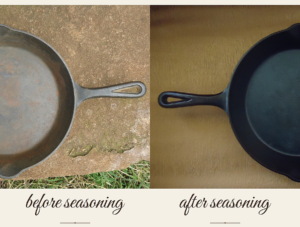
Cast iron has been used for centuries. It requires no synthetic coating and, when properly seasoned, develops a naturally non-stick surface through layers of polymerised cooking oil.
It retains heat exceptionally well, which means food cooks evenly at lower flame settings. Cooking with cast iron also adds small amounts of dietary iron to food.
2. Earthenware — Ancient Clay, Modern Benefits
Earthenware pots are among the oldest cooking vessels in human history. Clay cooking retains gentle, even heat and requires no synthetic materials or coatings of any kind.
The porous nature of unglazed clay allows moisture to circulate during cooking. This keeps food naturally tender and reduces the need for added fats or oils.

Glazed earthenware adds a smooth, easy-to-clean surface while preserving the heat properties of the clay beneath. Look for lead-free certified glazes — quality earthenware manufacturers test and disclose this clearly.
Cooking in clay also imparts trace minerals into food naturally. For slow-cooked meals like stews, soups, and grains, earthenware is one of the most body-friendly surfaces available.
3. Stainless Steel — Durable and Versatile
Stainless steel is a go-to material in professional kitchens for good reason. It handles high heat, works across all cooking methods, and contains no coatings that degrade over time.
Stainless steel avoids PFAS, lead, and coatings altogether — eliminating risks from chipping or nanoparticle release entirely. Quality stainless steel — look for 18/10 grade — is particularly resistant to corrosion and performs consistently over years of use.
4. Ceramic — A Clean Non-Stick Surface
Ceramic cookware offers genuine non-stick performance without synthetic chemical coatings. Pure ceramic is made from clay and earth minerals, kiln-fired at temperatures between 1,800°F and 2,400°F — high enough to burn away natural impurities and produce a surface that does not transfer chemicals into food.
It is a practical choice for everyday cooking, particularly for eggs, fish, and lighter meals where a non-stick surface is genuinely useful.
5. Carbon Steel — Lightweight and Responsive
Carbon steel offers many of the same benefits as cast iron at a lighter weight. It seasons naturally, responds quickly to heat changes, and develops a non-stick surface over time.
It is particularly well-suited to high-heat cooking methods like searing and stir-frying. Like cast iron, it requires no synthetic coatings and improves with regular use.
How Your Cookware Affects Inflammation in the Body — The Daily Habits That Matter
Choosing better cookware is the first step. How you use it matters just as much.
Keep surfaces intact. A well-maintained pan performs better and keeps its protective surface longer. Use wooden, silicone, or bamboo utensils to preserve any coated surface.
Match heat to the task. Most healthy cookware materials perform best at moderate heat. High heat should be reserved for materials designed to handle it — carbon steel, stainless steel, and cast iron.
Store cookware carefully. Stacking pans without protection scratches surfaces over time. A simple pan protector or cloth between stacked pieces extends the life of any cookware significantly.
A Practical Transition
Switching your entire cookware collection at a go is really not practical. Instead, start with the pan you use most — likely a skillet or sauté pan — and choose a cast iron, stainless steel, or ceramic option as you work your way to other items.
From there, replace pieces gradually as they wear out. Within a season or two, your kitchen will reflect the same care you put into the food you cook in it.
How your cookware affects inflammation in the body is not a dramatic or immediate process. It is cumulative — the result of daily exposure over time, in both directions.
The same intentionality that goes into choosing anti-inflammatory foods, supporting your gut health, and managing stress applies here too. A kitchen stocked with the consideration that cookware affects inflammation in the body is an added layer of support for the body you are working to take care of.