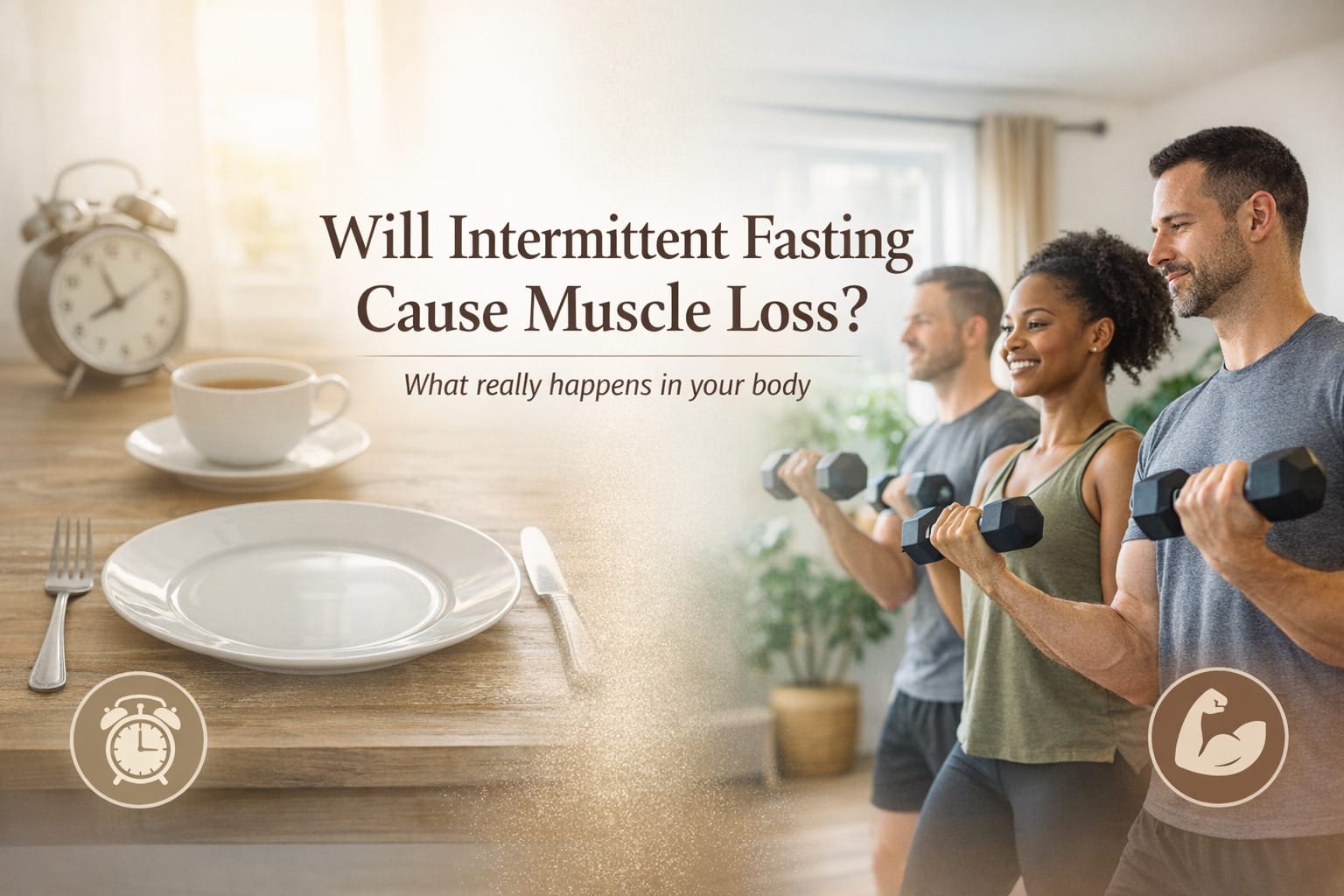
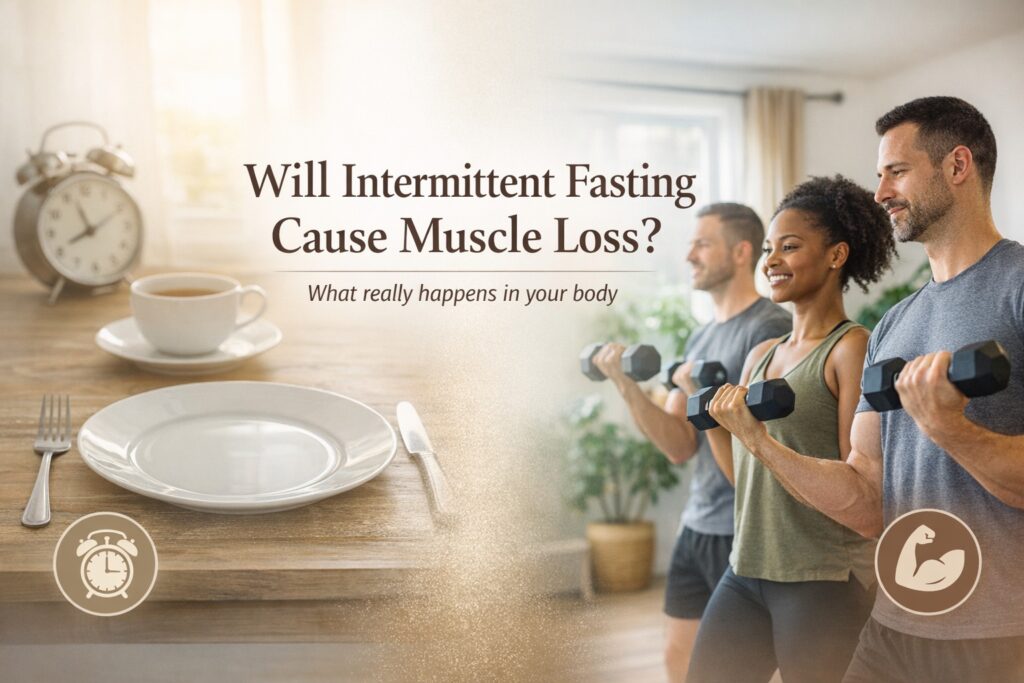
Intermittent fasting has become a popular way to manage weight, improve digestion, and simplify eating. But one concern keeps coming up: will intermittent fasting cause muscle loss? It’s a fair question, especially if staying strong and energised matters to you.
The short answer is — not necessarily. Let’s break down what’s actually happening in your body.
What Happens During a Fast?
When you stop eating, your body doesn’t immediately panic. It first burns through glycogen (stored sugar), then gradually shifts to burning fat for energy. This fat-burning shift is actually one of the main reasons people try intermittent fasting.
The worry is that once glycogen runs out, the body starts breaking down muscle. While that can happen in extreme or prolonged starvation, it’s not what happens during a normal 12–16 hour fast. Your body is wired to preserve muscle because it needs it for movement, strength, and survival. It will burn fat first. It also releases growth hormone during fasting periods, which actively helps protect muscle tissue.
So intermittent fasting, done sensibly, is not the problem. Certain habits around it can be.
Habits That Increase The Risk Of Muscle Loss
1. Not Eating Enough Protein
Protein is the raw material your body uses to maintain and repair muscle. If you break your fast with tea and bread and call it a meal, your body simply doesn’t have what it needs. Include protein with every meal — eggs, beans, lentils, chicken, or Greek yogurt are all solid, accessible options.
2. Eating Too Little Overall
Some people significantly undereat during their eating window, especially when they’re trying to lose weight quickly. In the short term this might work, but over time the body starts conserving energy by breaking down muscle. Your meals should be balanced and genuinely satisfying, not just small.
3. Not Using Your Muscles
Your body keeps what it uses. If you’re fasting but largely sedentary, your body has little reason to maintain muscle mass. You don’t need a gym — bodyweight exercises at home, walking uphill, or carrying heavy groceries a few times a week is enough to signal to your body that muscle is worth keeping.
4.Fasting Windows That Are Too Long
Short fasting windows of 12–16 hours are generally well-tolerated. Very long or frequent fasts without adequate nutrition are where the real risk of muscle loss creeps in. Balance matters more than extremes.
How Fasting Can Actually Support Muscle Gain
When done well, intermittent fasting can work in your favour. Fasting raises growth hormone levels, which protects muscle and supports fat burning. It also improves insulin sensitivity, meaning your body gets better at using the nutrients you eat — so the protein and food you consume during your eating window is used more efficiently.
Think of it this way: fat is stored firewood, meant to be used for energy. Muscle is the structure of the house. Your body burns the firewood first. But if you stop maintaining the house and never bring in repair materials (protein, movement), it will weaken over time.
Practical Ways To Protect Your Muscle
- Prioritise protein with every meal. Eggs with vegetables, beans with rice, chicken with sweet potatoes — simple combinations that give your body what it needs to stay strong.
- Break your fast with a balanced meal. Avoid starting with only sugar or refined carbs. A meal that includes protein, healthy fats, whole carbohydrates, and vegetables sets your body up to recover and rebuild.
- Move regularly. Even 10–20 minutes of light resistance or bodyweight work a few times a week is enough to maintain muscle. Consistency beats perfection every time.
- Stay hydrated. Fatigue and weakness during fasting are often dehydration, not muscle loss. Drink enough water throughout the day before assuming something is wrong.
- Listen to your body. If you feel consistently dizzy, weak, or exhausted, your fasting window or meal quality probably needs adjusting — shorten the fast or improve what you’re eating.
Intermittent Fasting & Muscle Loss A Few Myths Worth Clearing Up?
“Fasting always burns muscle first” — not true. Your body strongly prefers fat as a fuel source during short fasts.
“You need to eat every 2–3 hours to keep muscle” — total daily nutrition and activity level matter far more than meal frequency.
“You can’t build muscle while fasting” — you can maintain and even build muscle during intermittent fasting as long as protein intake and resistance activity are adequate.
Approach This Carefully If..
You’re underweight, recovering from illness, have high physical demands, or have been advised against fasting by a doctor, it’s better to focus on consistent nourishment first rather than restricting eating windows.
Intermittent fasting does not automatically cause muscle loss. When done with intention — enough protein, regular movement, and balanced meals — it can support fat loss while keeping you strong.The focus doesn’t need to be on fear of losing muscle. It needs to be on building simple, sustainable habits that actually nourish your body.