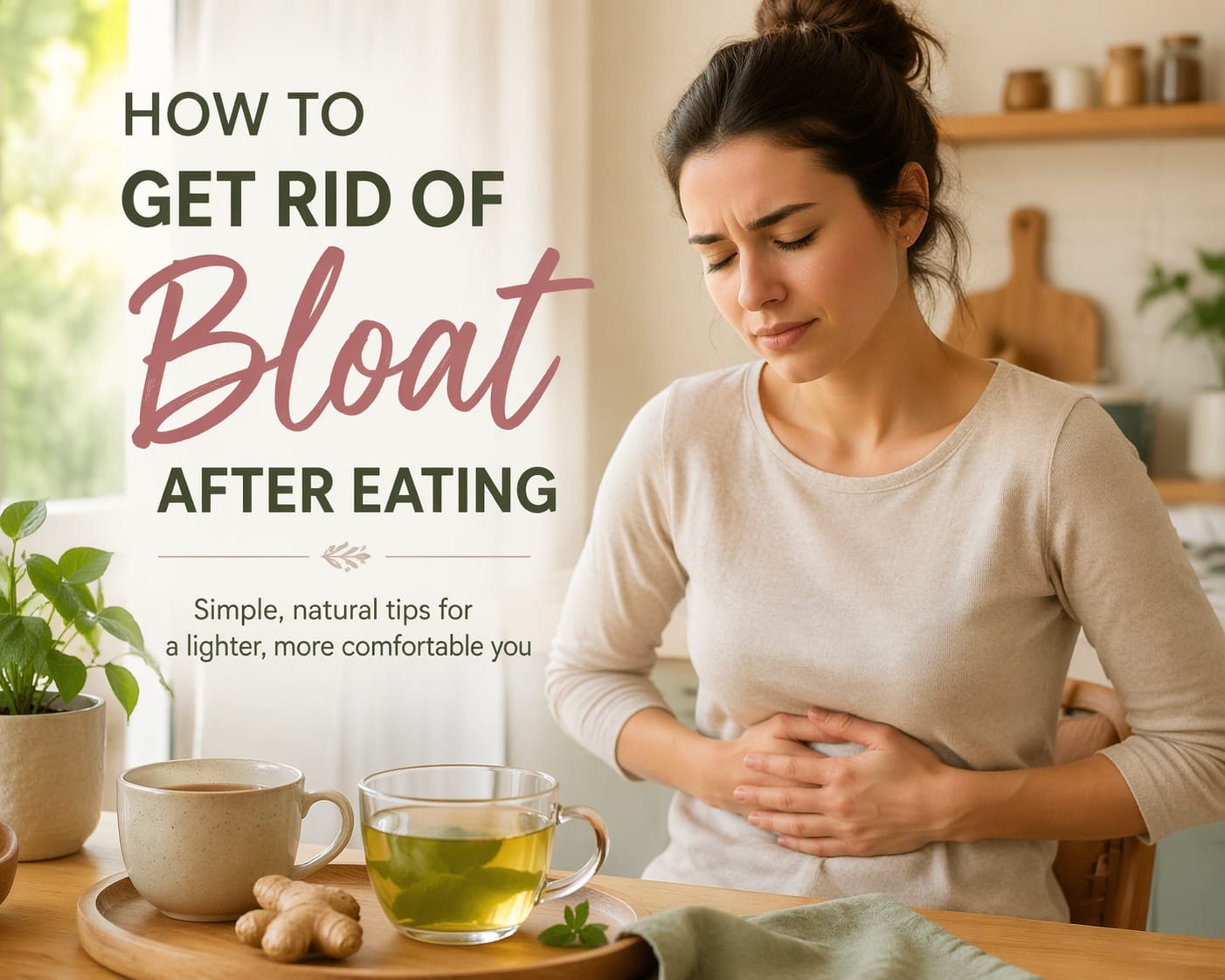
Feeling uncomfortably full after a meal can really take the joy out of eating. That tight, heavy feeling in your stomach is something a lot of people deal with, and the good news is you don’t have to just push through it. There are gentle, practical ways to get rid of bloat after eating — and most of them are simpler than you’d expect.
WHY DOES BLOATING HAPPEN IN THE FIRST PLACE?
Before jumping into solutions, it helps to understand what’s going on in your body. Bloating usually comes down to two things: excess gas building up, or digestion slowing down. Either way, your stomach ends up feeling tight, swollen, or even a little painful.
The cause is often something simple. Eating too fast means you’re swallowing more air than usual. Overeating stretches the stomach and makes it harder for your body to process food efficiently. Certain foods — beans, dairy, fried meals, carbonated drinks — are also common culprits for many people.
Because everyone’s body is different, figuring out your personal triggers is one of the most useful things you can do. Keeping a simple food journal and noting how you feel after meals can reveal patterns pretty quickly.
WHAT TO DO RIGHT AFTER A MEAL
Take a short walk
It’s tempting to sit down or lie on the couch after eating, but even a 10–15 minute walk makes a real difference. Movement helps push food through your digestive system, which reduces gas buildup and leaves your stomach feeling lighter.
Sip something warm
Swap out cold drinks for warm water, ginger tea, or peppermint tea after meals. Ginger is great for reducing gas, while peppermint relaxes the muscles in your digestive tract. Just sip slowly rather than drinking a large amount all at once.
Try a gentle abdominal massage
Using your fingertips, rub your abdomen in slow, clockwise circles — following the natural direction of digestion. It encourages your intestines to keep things moving and helps trapped gas pass more easily.
Use a warm compress
A warm water bottle or heating pad placed on your stomach can relax tight muscles and ease discomfort. Pair it with some slow, deep breaths for even better results.
Quick tip: A tablespoon of coconut oil — solid or liquid — taken on its own can bring noticeable relief within a short time. A personal favourite remedy that works.
HABITS THAT PREVENT BLOATING OVER THE LONG TERM
Slow down and eat mindfully
If you tend to eat quickly, this is probably the single biggest change you can make. Try chewing each bite thoroughly — somewhere between 15 and 30 times — and put your fork down between bites. Eating without distractions like your phone or TV helps too, since you naturally pay more attention to the pace of your meal.
Eat to about 80% full
Overeating is one of the most common causes of post-meal bloating. Your stomach stretches when it’s overloaded, and digestion slows as a result. Aiming for smaller, balanced meals and stopping when you feel comfortably satisfied — not stuffed — can make a noticeable difference over time.
Drink water between meals, not during
Staying well-hydrated throughout the day supports digestion and helps prevent constipation. That said, drinking large amounts during a meal can dilute digestive juices and slow things down. Sipping water between meals tends to work better.
Add fibre gradually
Fibre is important for gut health, but introducing too much too quickly can actually cause bloating on its own. Add fruits, vegetables, and whole grains to your diet slowly, giving your body time to adjust without discomfort.
Look after your gut bacteria
A healthy gut microbiome plays a big role in how well you digest food. Fermented foods like yogurt, kefir, and fermented vegetables introduce beneficial bacteria that support digestion. Cutting back on processed foods also helps your gut function more efficiently over time.
Don’t underestimate stress
Stress has a surprisingly strong effect on digestion — when you’re anxious or overwhelmed, your body actually slows down the digestive process. Simple habits like deep breathing, prayer, or a few minutes of quiet time after meals can help calm your system and keep digestion on track.
WHEN SHOULD YOU BE CONCERNED?
Bloating after eating is usually harmless, but it’s worth paying attention to patterns. If you’re experiencing bloating very frequently, if it’s severe, or if it comes alongside persistent pain or changes in your bowel habits, it’s a good idea to speak with a doctor rather than just managing the symptoms at home.
Getting rid of bloating after eating doesn’t require an overhaul of your lifestyle. More often than not, a few small, consistent changes — slowing down at meals, choosing the right foods, moving a little after eating — are all it takes to feel noticeably more comfortable. Your body is usually pretty good at communicating what it needs. The key is learning to listen.