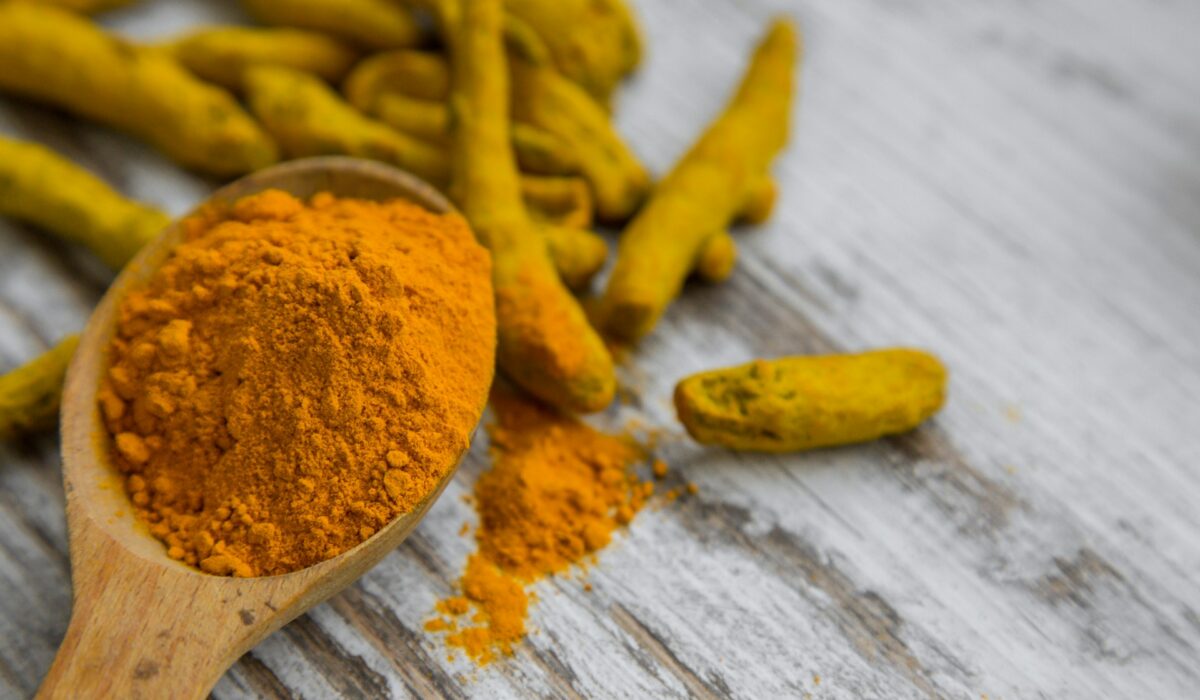
That intense yellow-orange colour in your turmeric may be exactly what convinces you that you’ve bought a good product. But colour alone can be deceptive. Unadulterated turmeric powder should owe its appearance to the turmeric itself, yet fillers and added colourants can be used to make an inferior product look more convincing.
Once the rhizomes have been ground into a fine powder, telling the difference becomes much harder.
That doesn’t mean every inexpensive or intensely coloured turmeric is adulterated. Natural turmeric varies in colour, aroma and strength depending on the variety, growing conditions and processing. The challenge is knowing which differences are normal and which ones deserve a closer look.
Why Turmeric Powder Is Easy to Adulterate
Whole turmeric is difficult to disguise. Powder is another story.
A dried turmeric rhizome gives you something to inspect. You can see whether it is intact, damaged, unusually light or covered with anything that doesn’t belong there. Grinding removes those clues and creates a uniform product in which a cheaper powder can be mixed without immediately standing out.
There is a financial incentive too. Materials such as starches and flours can add bulk, while spent or inferior turmeric may be mixed with better-quality material. Some adulterants are chosen because they resemble turmeric closely enough to escape casual inspection.
Colour creates another opportunity. Consumers naturally associate a strong yellow colour with good turmeric, so making a product look more intensely coloured can make it easier to sell.
What Can Be Added to Turmeric Powder?
Adulteration doesn’t always mean someone has replaced most of the turmeric with something else. Sometimes the quantity is small enough that the product still looks and smells reasonably convincing.
Starches and flours are among the simpler ways to bulk up powdered spices. Other reported materials include chalk-like substances, yellow mineral powders and plant material that isn’t declared on the label. Spent turmeric—the material left after some of the desirable compounds have already been extracted—has also been identified as a potential adulterant.
Then there are colourants.
Artificial yellow dyes can make a weak or diluted product look more like strongly coloured turmeric. The most concerning example is lead chromate, a yellow pigment that has been found in adulterated turmeric in parts of South Asia.
Recent research has found evidence that this isn’t merely an accidental contamination problem. Investigations have documented the deliberate addition of lead chromate to turmeric to improve its appearance, particularly where buyers strongly preferred intensely yellow turmeric.
Don’t Judge Turmeric by Colour Alone
A naturally strong colour isn’t a problem. Turmeric varieties differ, and processing and storage can affect the final shade.
The problem is assuming that stronger colour automatically means better turmeric.
That assumption can actually encourage adulteration. Research into turmeric supply chains has found that demand for highly coloured turmeric can create an incentive to improve the appearance of lower-quality material with added pigments.
So don’t reject a turmeric simply because it isn’t an intense orange-yellow, and don’t automatically choose the most intensely coloured one on the shelf.
Instead, consider the whole picture.
A good powder should have a recognizable turmeric aroma—earthy, warm and slightly peppery. If the smell is extremely weak, stale, musty or oddly chemical, that’s worth noticing.
The texture should also be reasonably consistent. Strange fibres, visible particles or obvious differences in texture don’t prove adulteration, but they give you a reason to investigate further.
Check Where the Turmeric Comes From
Packaged turmeric gives you useful information that loose powder doesn’t. Look for a named producer or packer, an ingredient declaration, batch information and a traceable source.
Loose powder isn’t necessarily bad, but it gives you fewer clues. If the seller cannot tell you where the turmeric came from, when it was processed or whether it was ground from whole rhizomes, you’re relying almost entirely on appearance.
For someone who buys turmeric frequently, there’s another option worth considering: buy whole dried rhizomes from a reliable source and grind smaller quantities yourself.
You still can’t visually guarantee that a whole rhizome is free from every contaminant, but you eliminate one major opportunity for a trader to mix an unrelated powder into your turmeric without your knowledge.
How to Buy Unadulterated Turmeric Powder
Look for a supplier with traceable sourcing and clear labelling. For packaged turmeric, choose products with identifiable manufacturers and batch information rather than anonymous repackaged powder.
If you have access to whole dried turmeric from a trustworthy source, that’s another useful option. You can inspect the rhizomes before grinding and then turn small quantities into powder as needed.
For people who buy turmeric regularly, it can also be useful to establish a relationship with a supplier rather than buying from whichever source happens to have the lowest price that week.
What Pure Turmeric Should Actually Look Like
There is no single shade that proves turmeric is genuine.
There is no particular smell that proves it either.
And no glass-of-water experiment can tell you that a powder is completely free of every possible adulterant.
That’s why identifying unadulterated turmeric powder is really a matter of combining several pieces of evidence: the source, packaging, appearance, aroma, ingredient information.