Bone broth and beef broth might look similar sitting on a stovetop, but they’re made differently, taste different, and serve different purposes. Yet, they still share a couple of similarities. If you’ve ever wondered which one to reach for — or whether they’re interchangeable — here’s a clear, practical breakdown.
What Is Beef Broth?
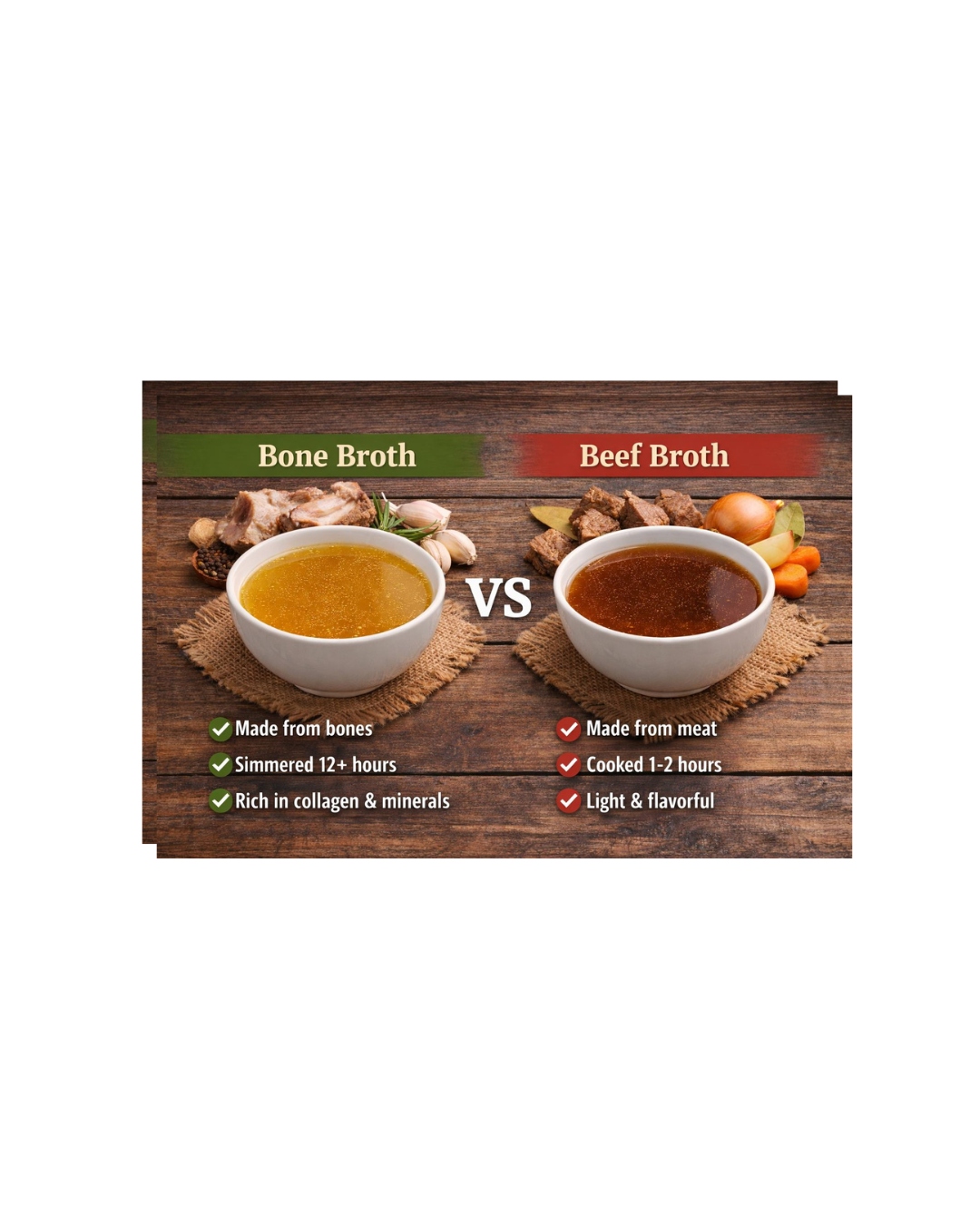
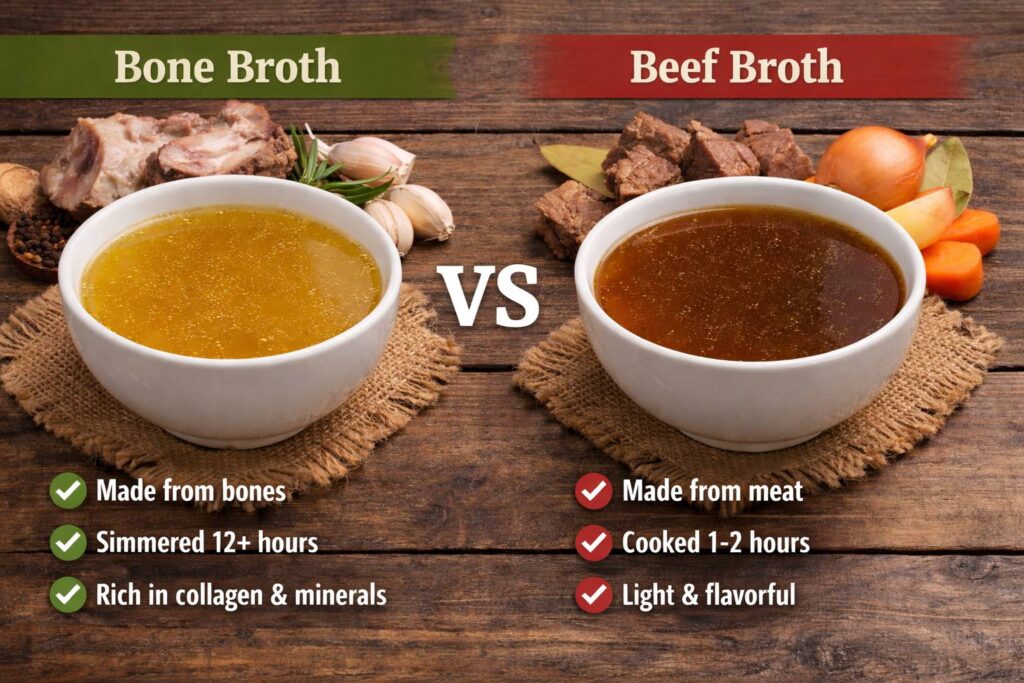
Beef broth is the everyday kitchen staple. It’s made by simmering beef meat, vegetables, and aromatics — typically onions, carrots, celery, garlic, and herbs — in water for between 45 minutes and 2 hours. The result is a light, thin, flavourful liquid that works beautifully as a base for soups, stews, sauces, and gravies.
The goal of beef broth is primarily flavour. It’s quick to make, affordable, and does the job well for everyday cooking.
What Is Bone Broth?
Bone broth is made from bones rather than meat — usually collagen-rich options like beef knuckles, joint bones, marrow bones, oxtail, or cartilage-heavy cuts. A small amount of meat may still be attached, but the bones are the focus. An acidic ingredient like apple cider vinegar or lemon juice is added to help draw minerals out of the bones.
Bone broth simmers for 12 to 24 hours, which is long enough to break down collagen into gelatin and extract nutrients that a quick broth simply can’t deliver. The result is a richer, thicker, more nutrient-dense liquid — one that often turns jelly-like when refrigerated, which is actually a sign of good quality.
Unlike beef broth, bone broth is commonly drunk on its own as a wellness drink, not just used as a cooking ingredient.
The Key Differences
1.Preparation Time
Cooking time is the most obvious difference — under 2 hours for beef broth, up to a full day for bone broth. That longer simmer is what makes bone broth nutritionally distinct.
2. Appearance and Texture
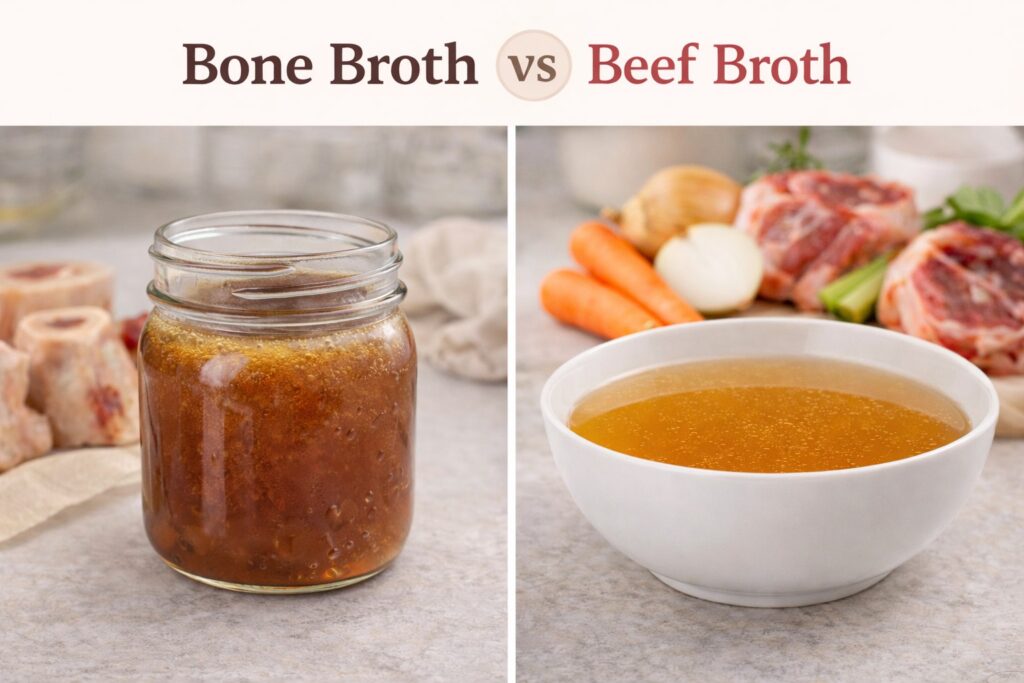
In terms of texture, beef broth stays thin and watery while bone broth becomes thick and sometimes gel-like when cooled, thanks to its higher gelatin content. Flavour follows the same pattern — beef broth is lighter and more delicate, while bone broth is deeper, richer, and more filling.
3. Nutritional Profile
Nutritionally, this is where bone broth stands out. Beef broth provides some protein, basic minerals from vegetables, and flavour with relatively few calories. Bone broth goes further, delivering collagen, gelatin, amino acids like glycine and proline, and minerals including calcium, magnesium, phosphorus, and potassium. These nutrients are particularly supportive for joint health, gut health, skin, and hair.
That said, beef broth isn’t unhealthy — it’s just lighter and less concentrated. It still hydrates, provides minerals, and offers comfort, especially when you’re feeling under the weather..
Health Benefits: Which One Wins?
If health benefits are your goal, bone broth has the edge. The collagen and gelatin it contains support cartilage, joints, and the gut lining. Gelatin in particular is gentle on digestion and may help soothe gut irritation. The collagen is also a natural food source of what many people spend money on in supplement form.
Beef broth is still a wholesome, nourishing choice — especially for everyday cooking — but it doesn’t carry the same concentrated wellness benefits as bone broth.
When To Use Each One
Beef broth is your go-to for quick soups, light sauces, cooking grains, and any recipe where you need a mild, flavourful base without a lot of richness. It’s practical, affordable, and easy to keep on hand.
Bone broth is better when you want maximum nutrition — drinking it on its own, making hearty soups and stews, recovering from illness, or boosting a recipe with extra protein and collagen.
In most recipes they’re interchangeable. Swapping beef broth for bone broth adds more richness and nutrition. Going the other way gives you a lighter result with less nutritional depth.
Beef broth is lighter, quicker, and built for flavour. Bone broth is richer, slower, and packed with nutrients. They look similar but serve different purposes — and you don’t have to pick just one.
Use beef broth for everyday cooking. Reach for bone broth when you want something nourishing, healing, or more nutritionally dense. Both have a place in a well-stocked kitchen.
.