Do you need to wash enoki mushrooms before cooking? It’s a simple question, but one that often sparks conflicting advice. Some homesteaders say they’re clean enough straight from the packet, while others wouldn’t dream of adding them to a pan without rinsing them first.
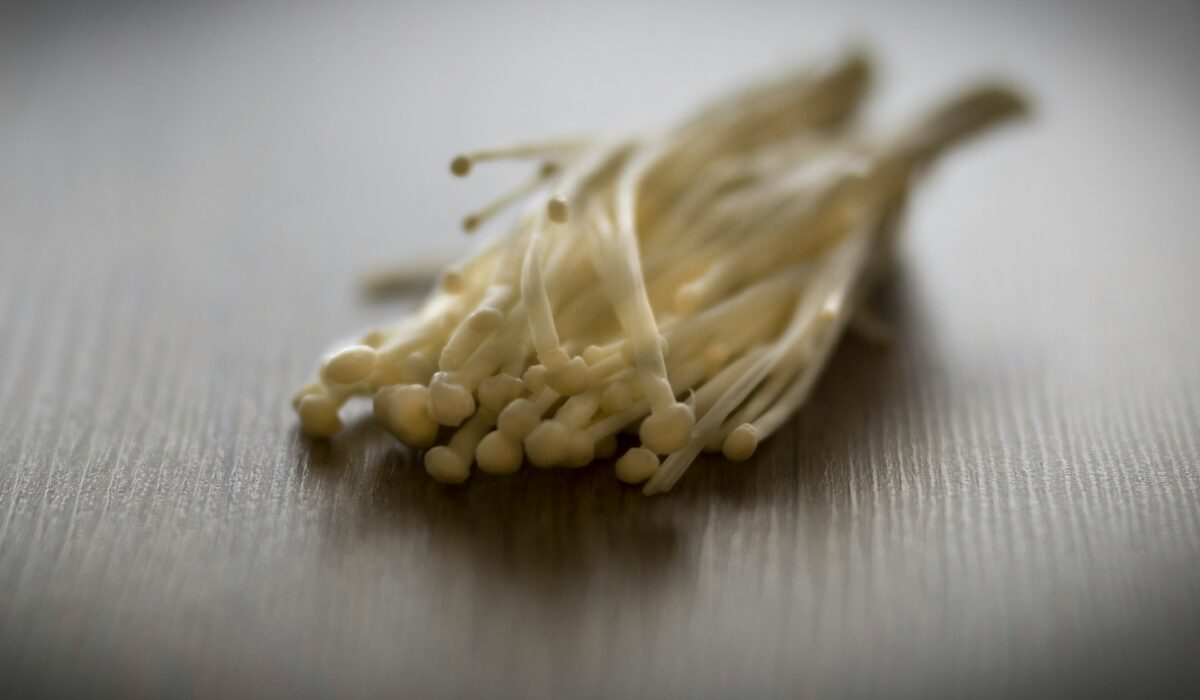
The truth lies somewhere in the middle. Enoki mushrooms are usually cultivated in controlled indoor environments, making them cleaner than many wild mushrooms, but they’re still a fresh produce item. A quick rinse, a small trim at the base, and a quick inspection are usually all it takes to prepare them for the pot.
Do You Need to Wash Enoki Mushrooms in the First Place?
The short answer is yes.
Although commercially grown enoki mushrooms are typically much cleaner than mushrooms foraged from the wild, they can still carry tiny bits of growing medium, packaging residue, or debris trapped around the tightly packed stems.
Enoki mushrooms often arrive in neat, white bundles that look almost spotless, leading many people to assume they’ve already been washed. In reality, being clean enough to package isn’t quite the same as being ready to cook.
Unlike mushrooms with broad caps that can simply be brushed clean, enoki grow in dense clusters where dirt or loose particles can hide near the base. That’s why a quick rinse is generally recommended, even if they appear perfectly clean.
Why the Base of Enoki Mushrooms Deserves the Most Attention
If there’s one part of the mushroom worth paying closer attention to, it’s the base.
Enoki mushrooms are sold with the stems still attached to a compact root end that once held the entire cluster together. This section is firmer than the rest of the mushroom and may contain traces of the growing substrate or compressed stems that don’t soften well during cooking.
Trimming away the bottom centimetre or two before doing anything else.
Once that section is removed, the mushrooms naturally separate into smaller bundles, making them much easier to rinse thoroughly. It also helps soups, stir-fries, and noodle dishes cook more evenly because the delicate stems are no longer held together in one dense block.
It’s a small step, but it makes both cleaning and cooking much easier.
The Best Way to Wash Enoki Mushrooms Without Damaging Them
The biggest mistake isn’t washing enoki mushrooms—it’s washing them for too long.
After trimming the base, gently pull the cluster into smaller sections. This allows water to reach between the stems without excessive handling, which can bruise the mushrooms.
A brief rinse under cool running water is usually all they need. There’s no benefit to soaking them in a bowl, and doing so can leave the delicate stems waterlogged. Like most cultivated mushrooms, enoki absorb moisture surprisingly quickly.
Once rinsed, give them a gentle shake or pat them dry with a clean kitchen towel if they’ll be stir-fried as a side dish. If they’re heading straight into soup or hot pot, a little extra surface moisture won’t make much difference.
The goal isn’t to scrub them spotless—it’s simply to remove anything that doesn’t belong there while preserving their delicate texture.
Do You Need to Wash Enoki Mushrooms Before Eating Them?
Technically, you could skip rinsing them, but it’s not a habit most food safety experts recommend. Fresh produce can pick up contaminants during growing, harvesting, packaging, and transport, even when it’s commercially cultivated.
A quick rinse takes less than a minute and removes any loose debris you might not notice at first glance.
It’s also worth remembering that enoki mushrooms are almost always served cooked. Their crisp texture softens beautifully in soups, ramen, hot pots, stir-fries, and noodle dishes, while cooking improves both flavour and food safety.
Does Washing Change the Taste or Texture?
Not if it’s done properly.
A quick rinse won’t rob enoki mushrooms of their mild flavour or signature crunch. Problems usually arise when they’re left soaking in water for several minutes.
Because the stems are so thin, they absorb moisture faster than larger mushrooms. Excess water can make them steam instead of brown in a hot pan, reducing the light, slightly crisp texture that makes enoki so enjoyable.
That’s why many experienced cooks recommend rinsing them briefly, draining well, and adding them toward the end of cooking. They only need a few minutes of heat before becoming tender.
Handled this way, they keep their pleasant bite while soaking up the flavours of the dish around them.
A Quick Note About Food Safety
Over the past several years, enoki mushrooms have been linked to a number of international food recalls involving Listeria monocytogenes. While these recalls affected specific batches rather than all enoki mushrooms, they highlighted the importance of handling fresh mushrooms carefully.
There’s no reason to avoid enoki mushrooms altogether. Instead, buy them from reputable retailers, keep them refrigerated, and check that the packaging is fresh and undamaged.
Washing helps remove surface debris, but it shouldn’t be viewed as a substitute for proper cooking. Thorough cooking remains the best way to enjoy enoki mushrooms safely, particularly if you’re preparing them for young children, older adults, pregnant women, or anyone with a weakened immune system.
It’s also worth checking for current food recall notices in your country if you hear about a mushroom-related safety alert. Fortunately, recalls are relatively uncommon, and following basic food handling practices greatly reduces the risk.
How to Tell If Enoki Mushrooms Have Gone Bad
Fresh enoki mushrooms should look bright, firm, and almost snowy white, with stems that hold together neatly.
As they begin to spoil, the first signs are usually excess moisture and a slippery or slimy texture. You may also notice yellowing stems, dark patches near the base, or an unpleasant sour smell.
If the mushrooms feel sticky or have developed a strong odour, it’s best to throw them away rather than trying to rescue them with another rinse.
When stored properly in the refrigerator, fresh enoki mushrooms are usually best enjoyed within a few days of purchase while they’re still crisp and fresh.
The Bottom Line
So, do you need to wash enoki mushrooms? In most cases, yes—but it doesn’t need to be an elaborate process.
A quick trim at the base, a gentle rinse under cool water, and a quick inspection are usually all that’s required before they go into the pan or pot. Those few extra moments help remove any trapped debris while preserving the delicate texture that makes enoki mushrooms so distinctive.
Simple preparation goes a long way, and once you’ve done it a couple of times, cleaning enoki mushrooms becomes just another quick step between opening the packet and enjoying your meal.