For most people with a tight schedule, the gap between wanting to cook well and actually doing it comes down to one thing: time. Not time to cook — time to learn. Interactive online cooking classes for busy professionals have changed that equation in a meaningful way.
They bring live instruction, real-time feedback, and professional culinary teaching directly into your kitchen on a schedule that works around your life.
In-person classes mean commuting, fixed schedules, and sharing a workstation with strangers. YouTube tutorials are free but rarely interactive, and pausing a video every 30 seconds while your onions burn is nobody’s idea of a learning experience.
What the best online platforms now offer is something genuinely different — structured curricula, qualified chef-instructors, and a format designed specifically for people with 90 minutes on a Wednesday evening, not a full Saturday afternoon.
With dozens of options competing for your attention, knowing which ones are actually worth it takes some sorting through. This guide does that for you.
Why Busy Professionals Are Turning to Online Cooking Classes
The shift toward online learning was already underway before remote work normalised it, especially post Covid-19. What has changed over the years is the quality. Early virtual cooking classes were little more than someone narrating a recipe over a pre-recorded video.
What exists now — particularly on the platforms covered below — is genuinely interactive: live chefs, real-time Q&A and small group settings.
There is also a wellness angle that tends to get overlooked in conversations about professional development. Cooking your own meals consistently is one of the most impactful things you can do for your health.
Research consistently shows that people who cook at home eat more nutritious food, consume fewer processed ingredients, and report higher satisfaction with their diet overall. For a professional managing stress, energy levels, and focus throughout a demanding week, learning to cook efficiently and well is not a hobby — it is a health investment.
What Makes a Cooking Class Actually Interactive
The word “interactive” gets stretched thin in online education. Before spending money on a platform, it is worth understanding what genuine interactivity looks like versus what is simply marketing language.
A truly interactive cooking class gives you live access to an instructor who can see or hear your questions and respond in real time. It has a small enough group that the chef can address individual issues — a sauce that is too thin, a dough that is not coming together — rather than broadcasting to a passive audience.
It sends you a prep checklist in advance so you are cooking alongside the instructor rather than watching and hoping to remember later. And it gives you a finished dish at the end, not just notes.
Pre-recorded platforms can be excellent for building knowledge, but they are not interactive in the same way. Knowing which format you need before signing up saves both money and disappointment.
Interactive Online Cooking Classes for Busy Professionals: What to Look for Before You Sign Up
Not every platform suits every schedule or learning style. Before committing, run through these questions:
- Is the class live or pre-recorded? Live classes offer real-time feedback. Pre-recorded platforms offer flexibility. Some platforms offer both — which is the best of both worlds for variable schedules.
- How long is each session? 60–90 minutes is the sweet spot. Longer than that and scheduling becomes difficult; shorter and there is rarely time to cook anything meaningful.
- Is the price per class or per household? Platforms like Sur La Table price per household, which makes them excellent value if you are cooking with a partner or family member.
- What skill level is it designed for? Some platforms assume basic competence and build from there. Others are genuinely beginner-friendly. Knowing which you need prevents frustration.
- Does it come with ingredient support? Some platforms now offer curated ingredient kits shipped to your door, removing the grocery planning step entirely
Which Ones Have the Best Reviews
The platforms below were selected based on consistently strong reviews from working professionals, verified instructor ratings, genuine interactivity, and practical scheduling for people with limited free time. Each one excels in a specific area, so the right choice depends on what you are looking for rather than there being one definitive answer.
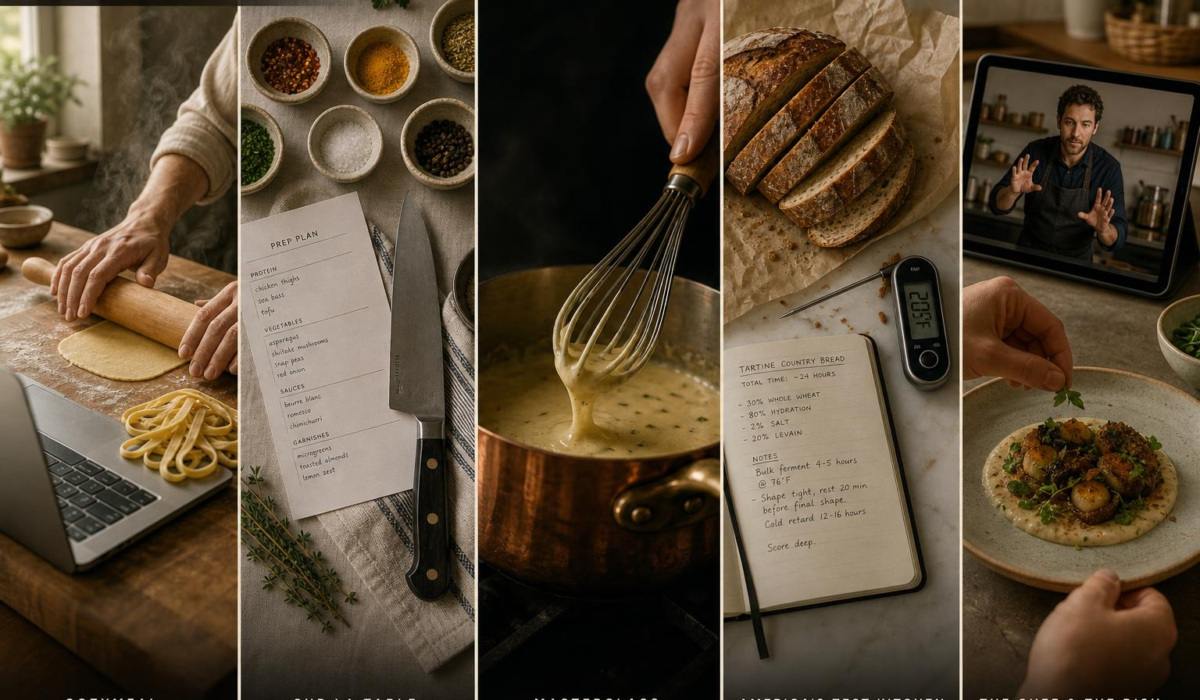
1. Cozymeal — Best for Live, Small-Group Energy
Cozymeal operates as a marketplace for live culinary experiences, connecting home cooks with professional chefs from around the world via Zoom. Classes cover an impressive range of global cuisines — handmade pasta, Thai street food, plant-based comfort food, sushi, and more.
Pricing starts from around $29 per device, making them one of the more pocket-friendly live options available.
What consistently earns Cozymeal strong reviews is the quality of the chef-student interaction. Classes are kept small, which means the chef can genuinely respond to what is happening in your kitchen.
Many classes also offer the option to have a curated ingredient kit delivered to you in advance. For a busy professional who wants the energy of a real cooking class without leaving home, Cozymeal delivers that consistently.
Best for professionals who want a social, engaging live experience with a global cuisine variety.
2. Sur La Table — Best for Structure and Real-Time Chef Access
For decades, Sur La Table has built a reputation for high-quality kitchenware, and its online cooking classes carry the same standard. Classes run for 90 to 120 minutes on average.
They are hosted live on Zoom, and are led by professionally trained chef-instructors who also happen to be experienced teachers — a distinction that matters more than it sounds. A chef who can cook is not always a chef who can teach, and Sur La Table’s instructors consistently earn praise for both.
Before each class, participants receive a detailed prep packet covering the ingredient list, equipment needed, and any preparation steps needed beforehand. During the session, a dedicated Q&A moderator ensures questions get answered in real time even in larger groups.
Pricing is per household rather than per person, which makes it genuinely good value for couples or families cooking together.
Reviews consistently highlight the structured pacing and the confidence participants feel recreating dishes independently afterward.
3. MasterClass — Best for Learning on Your Own Schedule
MasterClass is the outlier on this list in that it is not live — but it earns its place because of the depth and calibre of its culinary instructors. Gordon Ramsay, Thomas Keller, Wolfgang Puck, Gabriela Cámara — the roster reads like a culinary hall of fame.
Rather than teaching recipes step by step, MasterClass focuses on the philosophy and technique behind great cooking; why Thomas Keller approaches a sauce the way he does or what Gordon Ramsay thinks about seasoning.
Each course includes a downloadable workbook with recipes and lesson summaries, and the bite-sized lesson format — most run between 10 and 20 minutes — makes it genuinely easy to fit around a demanding schedule. An annual membership unlocks the full catalogue of over 200 classes across all subjects, which makes it excellent value if you plan to use it consistently.
The limitation worth being honest about: MasterClass is not interactive in the live sense. There is no instructor to ask why your beurre blanc split.
What it offers instead is a masterclass in culinary thinking from people at the top of the profession, which, for the right learner, is far more valuable than a live class with a less experienced instructor.
4. America’s Test Kitchen — Best for Building Technique From the Ground Up
America’s Test Kitchen has spent decades testing recipes hundreds of times to find the method that works consistently, not just the method that looks good on camera. Its online cooking school brings that same rigour to structured culinary education.
With over 320 courses covering everything from knife skills and sauce-making fundamentals to dumplings, bread baking, and advanced pastry work.
What distinguishes America’s Test Kitchen from other platforms is its emphasis on understanding why a technique works, not just how to execute it. If you follow a method and your dish does not turn out as expected, you have the background to diagnose what went wrong and correct it.
That kind of foundational knowledge compounds over time in a way that recipe-following never quite does.
Reviews from professionals particularly highlight the thoroughness of the instruction and the reliable, repeatable results. For someone who wants to build genuine cooking competence rather than just add a few dishes to their repertoire, this is the platform that delivers it most systematically.
5. The Chef & The Dish — Best for a Personalised One-on-One Experience
The Chef & The Dish takes a fundamentally different approach to every other platform on this list.
Rather than group classes or pre-recorded content, it pairs you directly with a professional chef for a live, one-on-one cooking session featuring dishes from a cuisine of your choice. Sessions are conducted via video call, typically run around two hours, and are tailored entirely to your skill level and interests.
The personalisation is what makes it stand out. If you are struggling with a specific technique, the chef addresses it directly.
If you want to learn the fundamentals of Japanese cooking, or French mother sauces, or how to build a proper weeknight meal from pantry staples — the curriculum is built around you. Users consistently describe the experience as transformative rather than transactional.
Best for: professionals who want a fully personalised culinary experience and are willing to invest in dedicated one-on-one instruction.
How to Get the Most Out of an Online Cooking Class
Signing up is the easy part. Getting genuine value from the experience requires a little intentionality, particularly when your schedule is already full.
Read the prep packet before the day of class. This sounds obvious, but many participants skip it and spend the first fifteen minutes of a live class catching up. Sur La Table and Cozymeal both send detailed prep materials in advance — using them properly sets you up to actually follow along rather than watch.
Treat the session like a meeting. Block it in your calendar, close your laptop, and give it your full attention for the duration. Interactive online cooking classes for busy professionals work best when they are treated as an investment in your time, not background noise while you check emails.
Cook the dish again within the week. The session itself builds familiarity. Cooking the same dish a second time, without the instructor, is where the learning actually consolidates. Most platforms provide recipe cards or workbooks specifically for this purpose.
Start with a cuisine or dish you already enjoy eating. Motivation matters more than most people account for. Learning to cook something you genuinely love eating keeps you engaged through the learning curve in a way that a technically interesting but personally uninspiring dish rarely does.
Final Thoughts On The Best Interactive Online Cooking Classes For Busy Professionals
The best interactive online cooking classes for busy professionals is the one that fits your schedule, matches your learning style, and gives you something worth making again. Cozymeal and Sur La Table deliver the live, social experience of a real cooking class from your own kitchen.
MasterClass offers depth and flexibility for self-directed learners. America’s Test Kitchen builds the kind of foundational technique that makes every future meal easier. And The Chef & The Dish gives you something none of the others can — a professional chef whose only job, for two hours, is to make you a better cook.
Any one of them is a better investment than another evening of staring into the fridge, wondering what to do with half an onion and some leftover rice.